SOFIA’S „THE HAPPY MAN“
SOFIA’S „THE HAPPY MAN“
Aleko Konstantinov
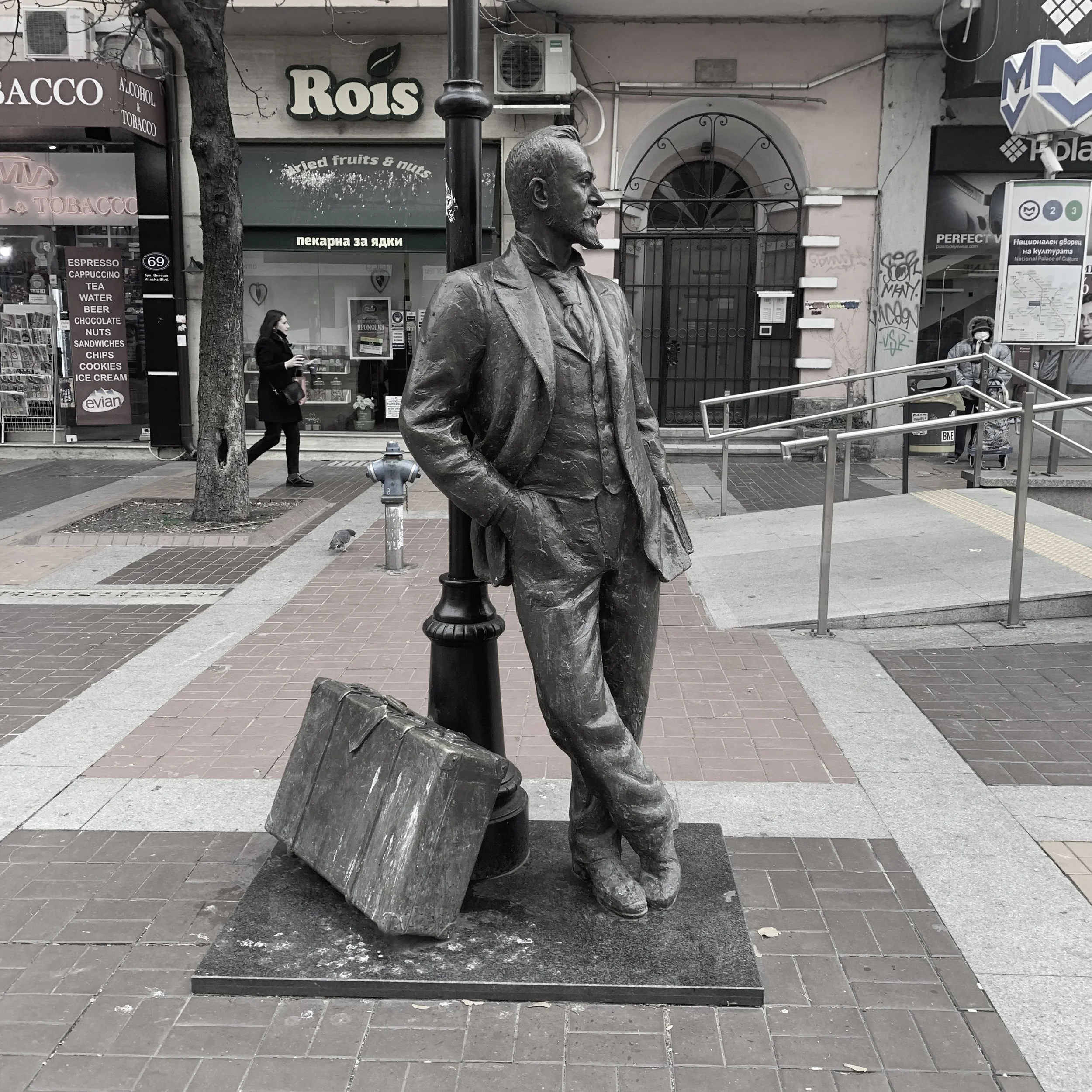
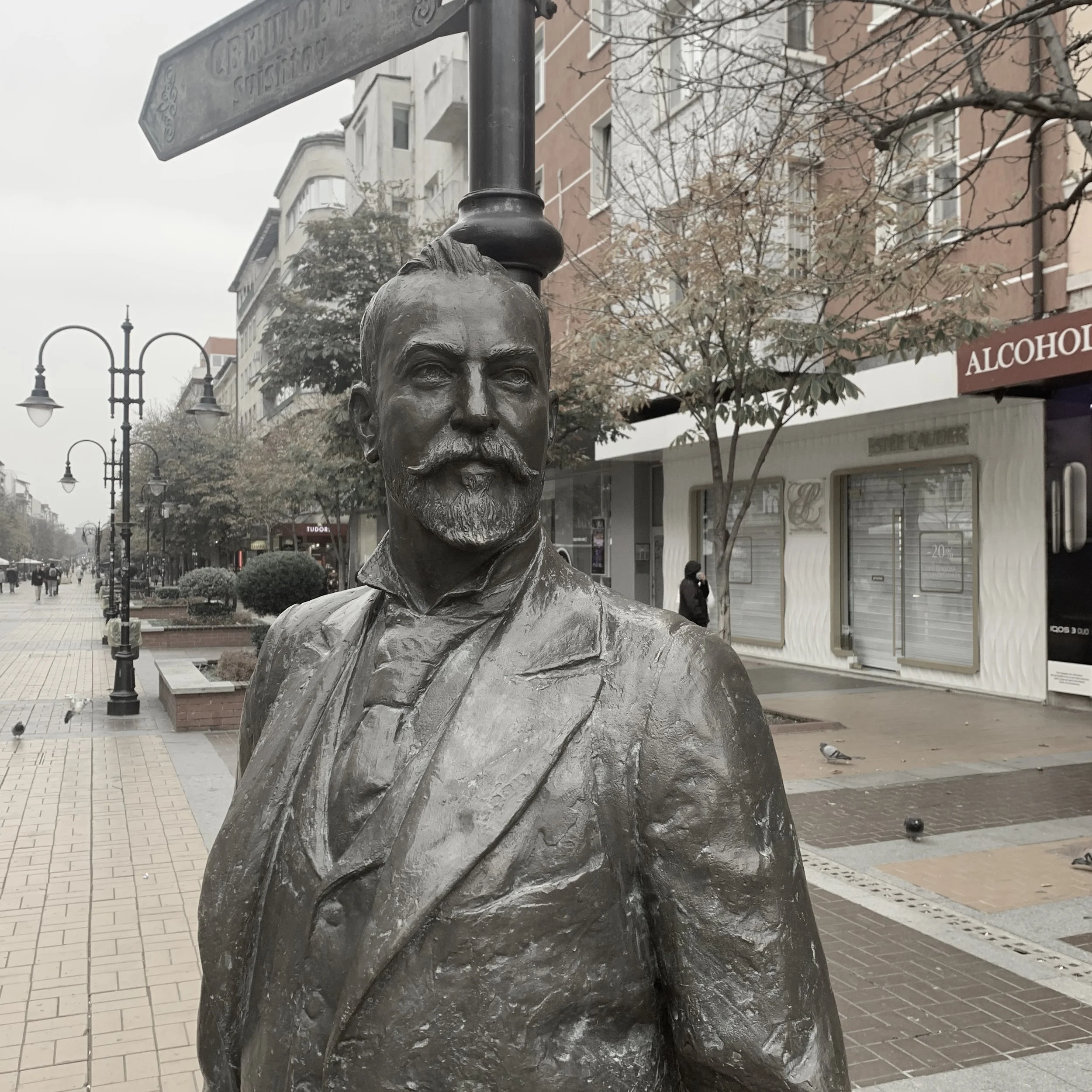
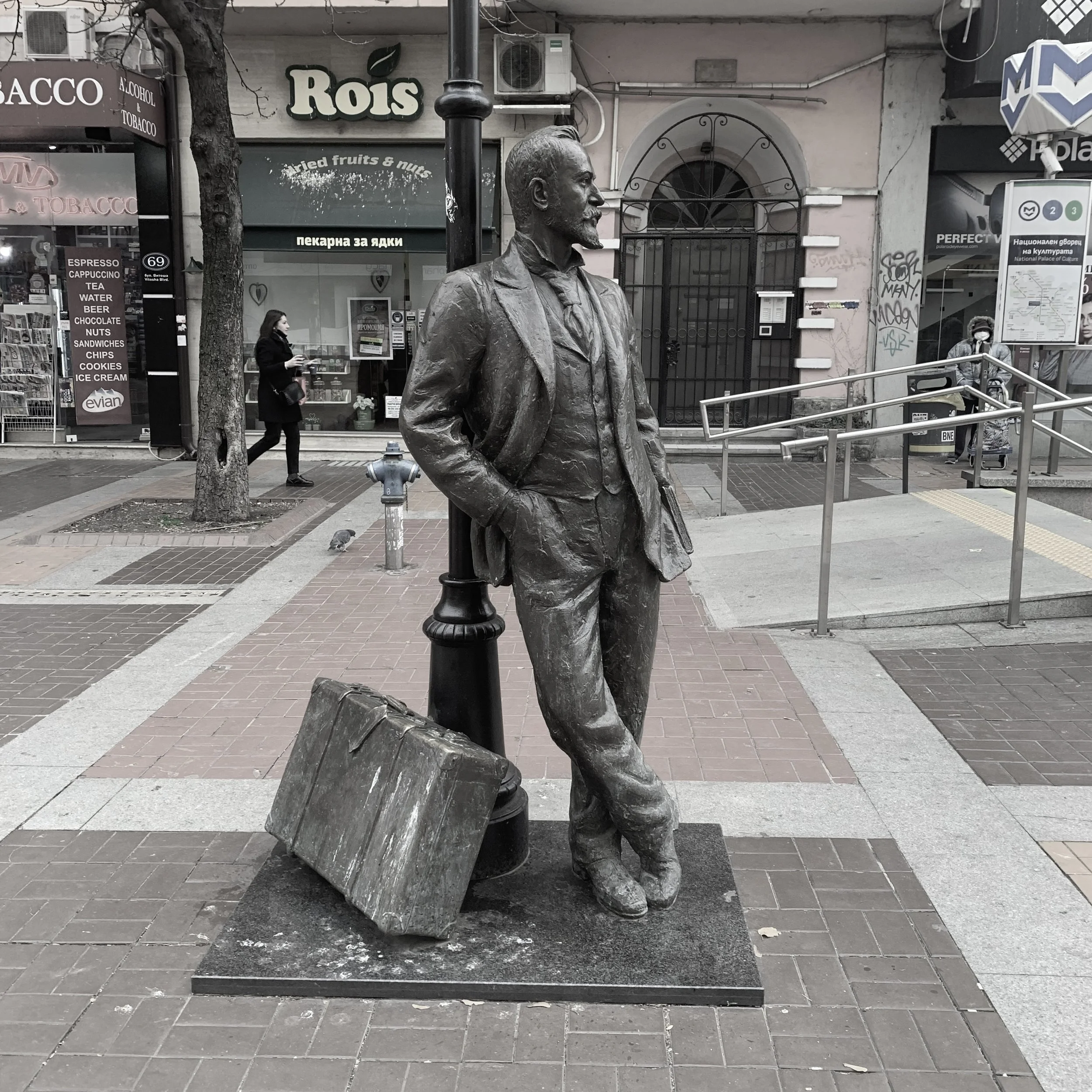
Man muss nur die richtigen Menschen treffen, schon lernt man etwas Neues. Ich habe es also dem großen bulgarischen Schriftsteller, Träumer und Reisenden Aleko Konstantinov – dessen Statue am Vitosha Boulevard steht – gleichgetan, meinen Koffer gepackt und habe neue Freunde in Sofia getroffen.
Aleko Konstantinov wurde am 1. Januar 1863 in Svishtov / Bulgarien als Sohn eines äußerst erfolgreichen und vielsprachigen Kaufmanns geboren. Schon sein Vater bereiste beruflich viele Länder Europas sowie große Teile des Osmanischen Reiches. Dies fiel ihm leicht, da er viele Sprachen sprach und sehr gut vernetzt war. Sogar Zar Alexander II. war einmal Gast in Aleko Konstantinovs Elternhaus, was von der Bedeutung der Familie Konstantinov erzählt.
Aleko Konstantinov selbst gilt als einen großen Träumer Bulgariens und wurde durch seine intensiven Reisen berühmt.
Nachdem er an der Kaiserlichen Novorossiya Universität (heute die Odesa Mechnykov National Universität) bis 1885 Jura studiert hatte, wandte er sich enthusiastisch dem Reisen und Schreiben zu:
1889 reiste er zur Weltausstellung nach Paris, 1891 zur Weltausstellung nach Prag und 1893 besuchte er die Weltausstellung in Chicago. Von hier hat er auch die Niagara Fälle besucht. Er war damit einer der ersten Bulgaren, die so weit herum gekommen sind und dies schriftlich verfasste.
Konstantinov schrieb in seinem ersten Buch „Bay Ganyo" einer Sammlung von diversen Kurzgeschichten über Bay Ganyo – „Onkel Ganyo“. Bay Ganyo wurde zu einer der bekanntesten Romanfiguren in ganz Bulgarien und es wird heutzutage angenommen, dass die Romanfigur auf der realen Person des Händlers Ganyo Somov, aus Karlovo basiert. Im ersten Teil des Buches werden die Reisen des umherziehenden Rosenhändlers Ganyo durch Westeuropa portraitiert. Obwohl sowohl unverschämt und ungeschickt, erweist sich Bay Ganyo als genial. Heute wird er von einigen Gelehrten als Spiegel eines sich modernisierenden Bulgariens angesehen. Der zweite Teil des Buches besteht aus mehreren unabhängigen Feuilletons und befasst sich mit der neuen, wachsenden Mittelschicht und dem politischen Leben Bulgariens. Bay Ganyo ist kein kleiner Rosenölhändler mehr, sondern ein großer Politiker, der eine Petition an den Prinzen schreibt, für das Amt des Mitglieds der bulgarischen Nationalversammlung kandidiert und eine politische Zeitung herausgibt. Anstatt wie im ersten Teil alleine zu arbeiten, ist Bay Ganyo nun der Anführer einer Gruppe Gleichgesinnter, die von gemeinen Taten angetrieben werden.
Er gilt als beispielhaftes Abbild eines Antihelden: ein ungebildeter, ignoranter, egoistischer und armer Dorfbewohner. Manchmal wird er gar als das Stereotyp des ungebildeten, profitorientierten Bulgaren und tatsächlich des durchschnittlichen Balkanmenschen wahrgenommen.
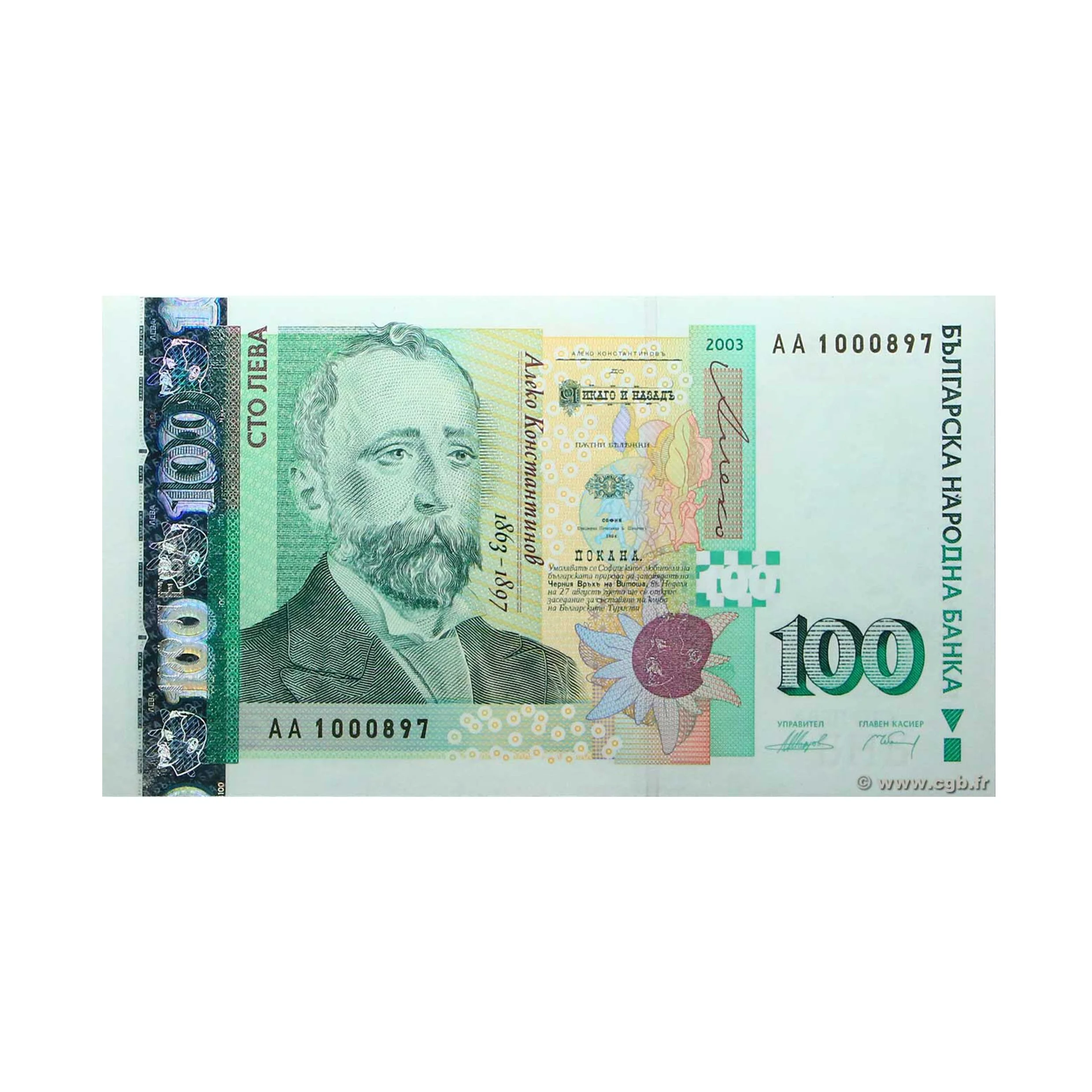
All dem steht natürlich Aleko Konstantinov selbst gegenüber, der es sogar bis auf die 100 Lev Banknoten Bulgarien geschafft hat. Aber viel wichtiger als das ist, wie Aleko Konstantinov sich selbst sah: Er nannte sich „The Happy Man“. Und das wünschen wir uns doch alle.
You just have to meet the right people to learn something new. So I followed the footsteps of the great Bulgarian writer, dreamer and traveller Aleko Konstantinov – whose statue stands on Vitosha Boulevard – packed my suitcase and met new friends in Sofia.
Aleko Konstantinov was born on the 1st of January 1863 in Svishtov, Bulgaria, the son of an extremely successful and multilingual merchant. His father had already travelled to many European countries and large parts of the Ottoman Empire on business. This was easy for him as he spoke many languages and was very well connected. Even Tsar Alexander II. was once a guest in Aleko Konstantinov's parental home, which tells of the importance of the Konstantinov family.
Aleko Konstantinov himself is considered one of Bulgaria's great dreamers and became famous for his intensive travelling.
After studying law at the Imperial Novorossiya University (now the Odesa Mechnykov National University) until 1885, he enthusiastically turned to travelling and writing:
In 1889 he travelled to the World's Fair in Paris, in 1891 to the World's Fair in Prague and in 1893 he visited the World's Fair in Chicago. From here he also visited Niagara Falls. He was one of the first Bulgarians to travel so far and write about it.
In his first book "Bay Ganyo", Konstantinov wrote a collection of various short stories about Bay Ganyo – "Uncle Ganyo". Bay Ganyo became one of the most famous novel characters in Bulgaria and it is now believed that the novel character is based on the real person of the merchant Ganyo Somov from Karlovo. The first part of the book portrays the journeys of the travelling rose merchant Ganyo through Western Europe. Although both impudent and clumsy, Bay Ganyo proves to be a genius. Today he is seen by some scholars as a mirror of a modernising Bulgaria. The second part of the book consists of several independent feuilletons and deals with Bulgaria's new, growing middle class and political life. Bay Ganyo is no longer a small rose oil merchant, but a major politician who writes a petition to the prince, runs for the office of member of the Bulgarian National Assembly and publishes a political newspaper. Instead of working alone as in the first part, Bay Ganyo is now the leader of a group of like-minded people who are driven by evil deeds.
He is seen as an exemplary image of an anti-hero: an uneducated, ignorant, selfish and poor villager. Sometimes he is even perceived as the stereotype of the uneducated, profit-orientated Bulgarian and indeed the average Balkan man.
All this is of course contrasted with Aleko Konstantinov himself, who has even made it onto the 100 Lev banknotes of Bulgaria. But much more important than that is how Aleko Konstantinov saw himself: he called himself "The Happy Man". And that's what we all want.
Dedicated to my friends Ersoy & Tunacan
Aimo Aimo