EXPO DI MILANO
World Exhibition 2015
Bel Paese Feeding the Planet, Energy for Life
1992 Sevilla, Lissabon und nun 1998 in Mailand. Entsprechend bin ich nicht völlig expo-unerfahren, doch bin ich nicht mehr derselbe – ich kam mit großen Erwartungen und kehrte etwas ernüchtert zurück.
Die Expo in Mailand möchte Antworten auf die zentralen Fragen der Ernährungs- und Energieversorgung geben. Zugleich will sie Vorbild sein, ohne sich über monumentale Bauten zu definieren.
Doch gelingt das? Vielleicht sind zu viele große Konzerne präsent, die nicht zwingend die gesündeste Ernährung auf ihre Fahnen schreiben: Nestlé, Coca-Cola, Ferrero oder McDonald’s. Überall laden Stände eher zum Essen ein als zur Information.
Da hilft es wenig, dass TechnoGym rund um das Gelände Fitnessgeräte aufstellt, um nach dem Motto „let’s move & donate food“ zu motivieren – auch wenn so 650.000 Mahlzeiten für unterernährte Kinder zusammenkamen.
Insgesamt wirkt die Expo wie eine Meile des schnellen Essens und wird von den Italienern bereitwillig als heitere Familienveranstaltung angenommen. Das will ich der Expo nicht anlasten, denn eine Weltausstellung soll Menschen anziehen. Anspruchsvollere Mailänder haben sich jedoch deutlich gegen diese oft schlichte Massenbegeisterung ausgesprochen.
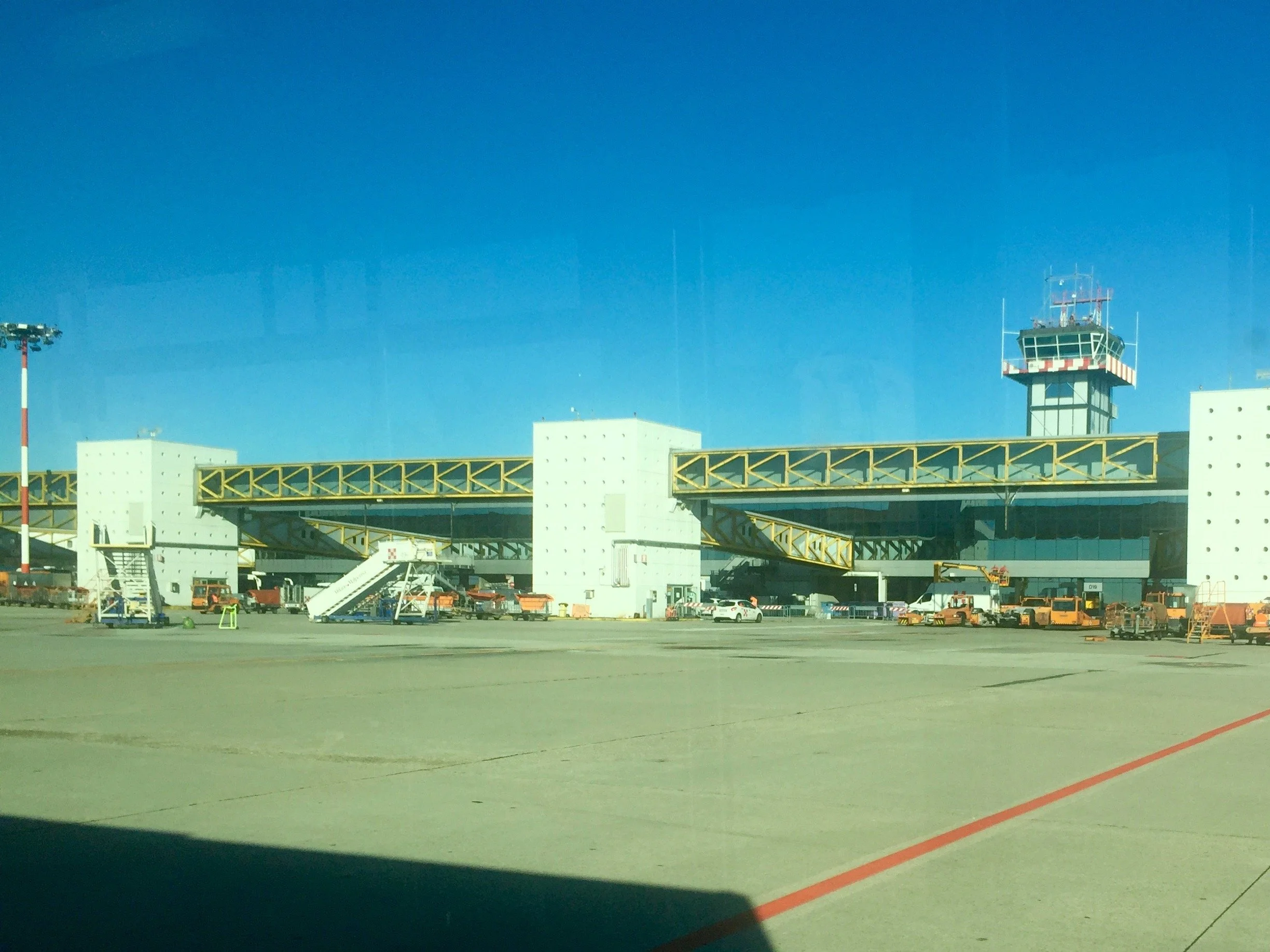
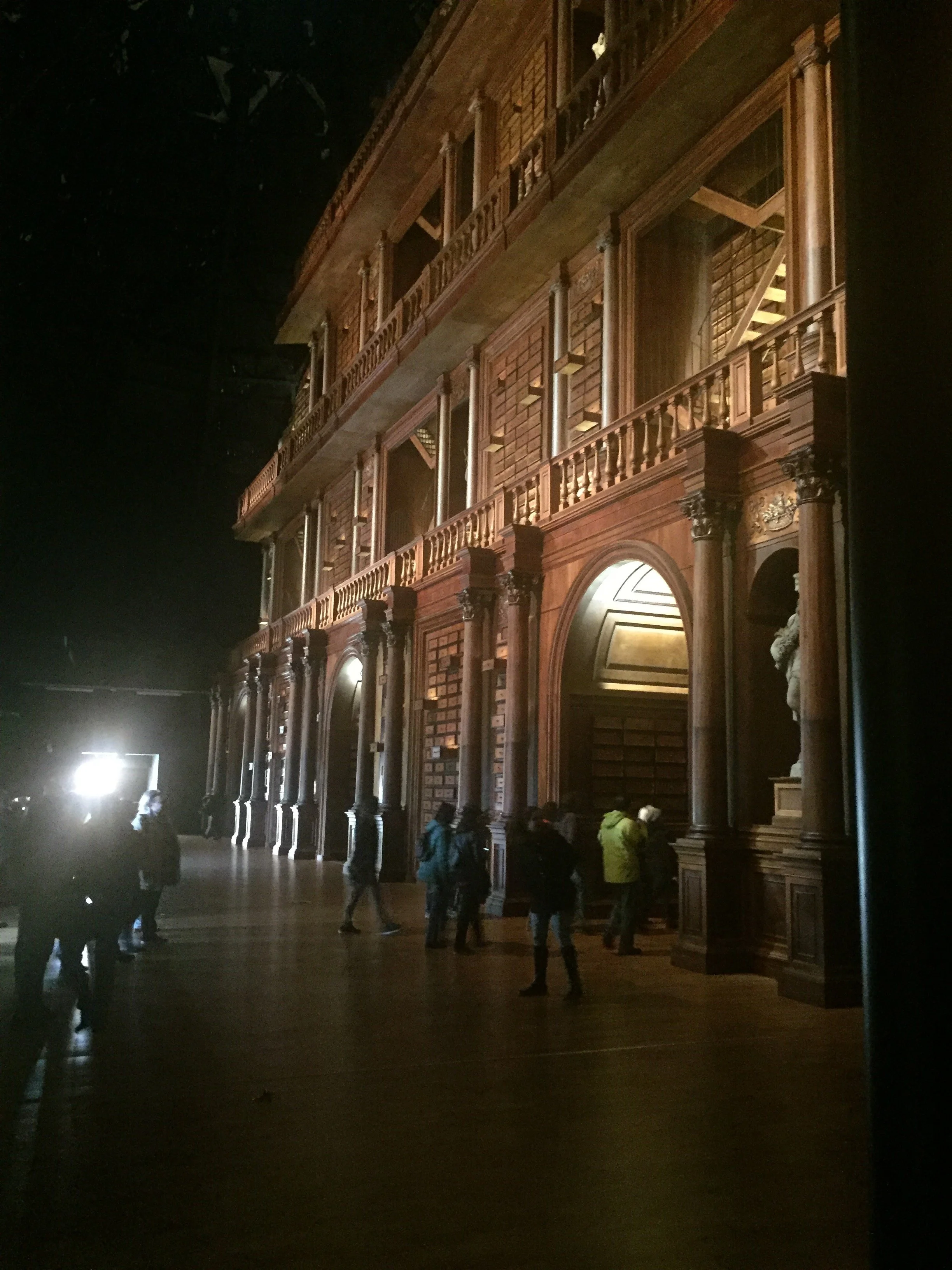
Die meisten Besucher erreichen die Expo per Metro in Rho Fiera und gelangen über eine gigantische Brückenkonstruktion über Gleise und Autobahn direkt auf das Gelände. Hier zeigt sich, dass Größe und Qualität unterschiedliche Kategorien sind, denn die Konstruktion wirkt ausgesprochen lieblos. Wer über den Flughafen Milano Malpensa angekommen ist, hat die Kraft einer Stahlstruktur erlebt, die dem Credo form follows function folgt – wenn auch etwas aus der Zeit gefallen. Die Expo insgesamt kann damit nicht mithalten, auch wenn das Padiglione Zero, das Eingangspavillon mit seiner organischen Struktur und seiner inneren „Bibliothek der Nahrung“, durchaus fesselnd ist. Jede Schublade repräsentiert ein Lebensmittel, ein Tier oder eine Zubereitung. Doch ist dieses Pavilion Zero schlecht organisiert, endlose Schlangen prägen den episodischen Einlass. Kleinere Pavillons können dieses Problem naturgemäß nicht lösen, das sei ihnen verziehen. Bei großen Strukturen wie dem Padiglione Zero jedoch sollten Kuratoren solche Abläufe souverän gestalten.
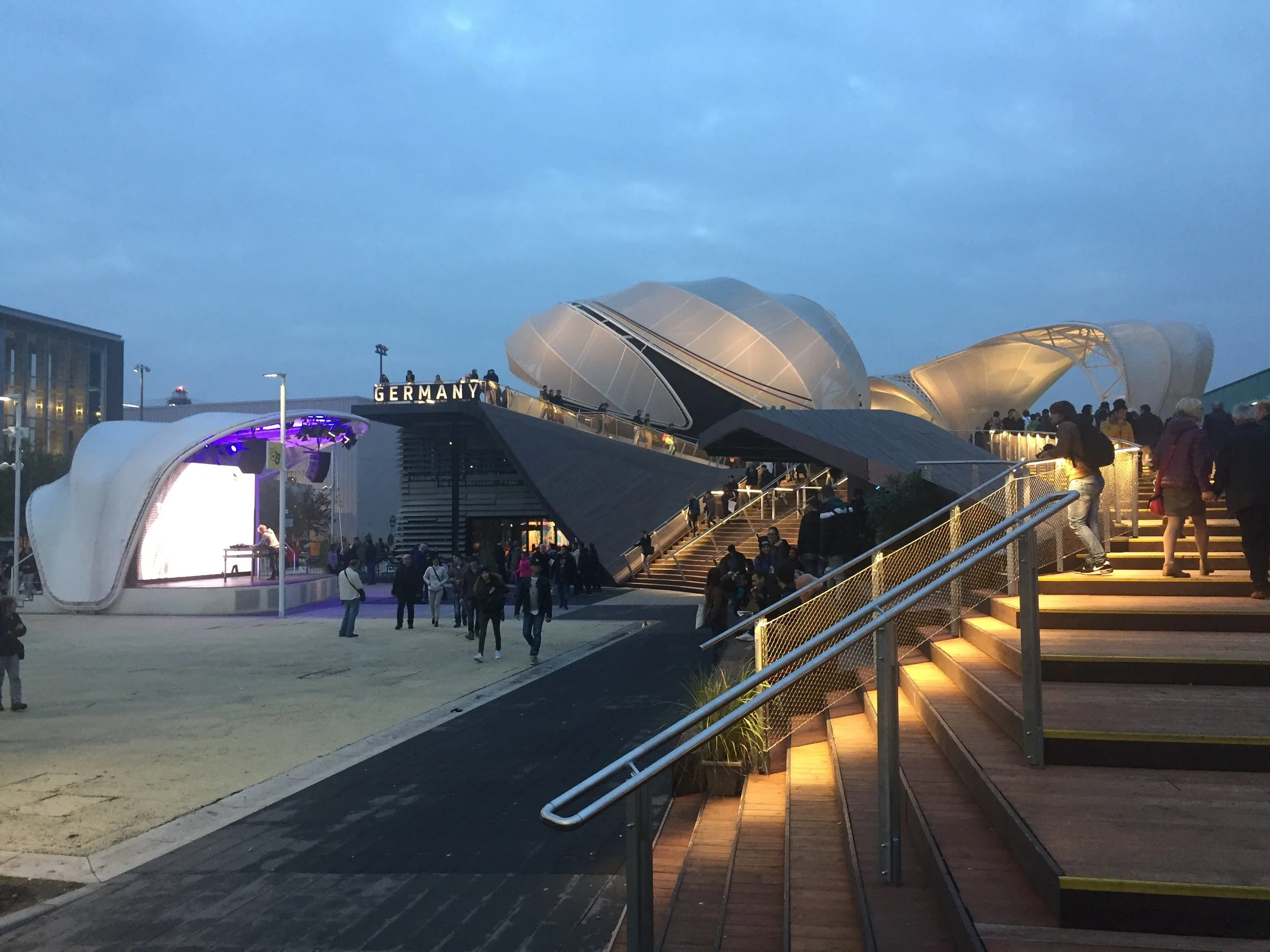
Als Beispiel gelungener Besucherführung kann der deutsche Pavillon gelten: Die äußere, frei begehbare Landschaftsebene führt sanft auf das Dach des Gebäudes, beschattet von übergroßen „Ideensetzlingen“ und deren solarem Blätterdach – und zugleich blickt man hinab auf die Bühne oder ins Innere des Pavillons. So verteilt sich der Besucherstrom, ohne dass spürbare Engpässe entstehen. Wahrhaft gut organisiert – und ausgesprochen deutsch.
1992 Seville, Lisbon and now in 1998 in Milan. Accordingly I am not completely Expo inexperienced, but I am no longer the same – came with great expectations,and returned a bit disappointed.
The Expo in Milan wants to provide answers to the major issues of food and energy supply. At the same time Expo wants to be a role model, not showing mega-buildings.
But if that succeeds? Perhaps too many big groups can be seen that do not necessarily have written the healthiest diet on their banners: Nestlé, Coca Cola, Ferrero or MacDonalds. Everywhere stalls invite more to eat, than to inform.
It helps little that TechnoGym offers around the expo fitness equipment to “lets move & donate food” – although as 650,000 meals were under-nourished children.
Overall the Expo appears as a mile of junk food and is easily accepted by the Italians for a simple and cheerful family party. But I do not want to accuse Expo of that, as a world exhibition should still appeal to people. More sophisticated Milanese people have however clearly spoken out against these often simple mass hype.
In most cases, visitors are arriving via metro at Rho Fiera and go through a gigantic bridge construction over railways and highway directly onto the Expo grounds. Here can be seen that size and quality are different issues, as the construction is quite uncharitable. Who had arrived Milano Malpensa, has seen and felt the strength of a steel structure that still follows the credo form follows function – though somewhat dated. The Expo as a whole can not keep up, although Padiglione Zero, the entrance pavilion with its organic structure and its internal library of the food is quite exciting. Each drawer is representing a food, an animal or a preparation. But this pavilion zero is not well-designed, endless queues are seen to acquire the episodic admission. Smaller pavilions can not solve this problem, this has to be forgiven. But within large forms like the Padiglione Zero curators should solve this problem easily. As a sample of valid visitor guidance may the German pavilion be seen: The outer and freely explorable landscape level gently leads onto the building’s roof, while shaded by oversized “idea seedlings” and their solar canopy – while at the same time you can look down at the stage or into the pavilion interior. Thereby the flow of visitors is spread without leading to tangible traffic jam. Truly well organized & German.
Doch genug der negativen Aspekte:
Das Symbol der Expo, der Albero della Vita, war durchaus beeindruckend.
Die abendliche Inszenierung von Marco Balich und seinem „Tree of Life“, die gemeinsam mit dem Mailänder Komponisten Roberto Cacciapaglia Millionen von Besuchern verzauberte, war ansprechend und unterhaltsam. Das Design lehnt sich an das Pflaster des von Michelangelo gestalteten Piazza del Campidoglio in Rom an, wurde in 3D übertragen und mit modernster Technik ausgestattet. In einigen Momenten blitzte italienischer Kitsch auf – doch auch das gehört hierher.
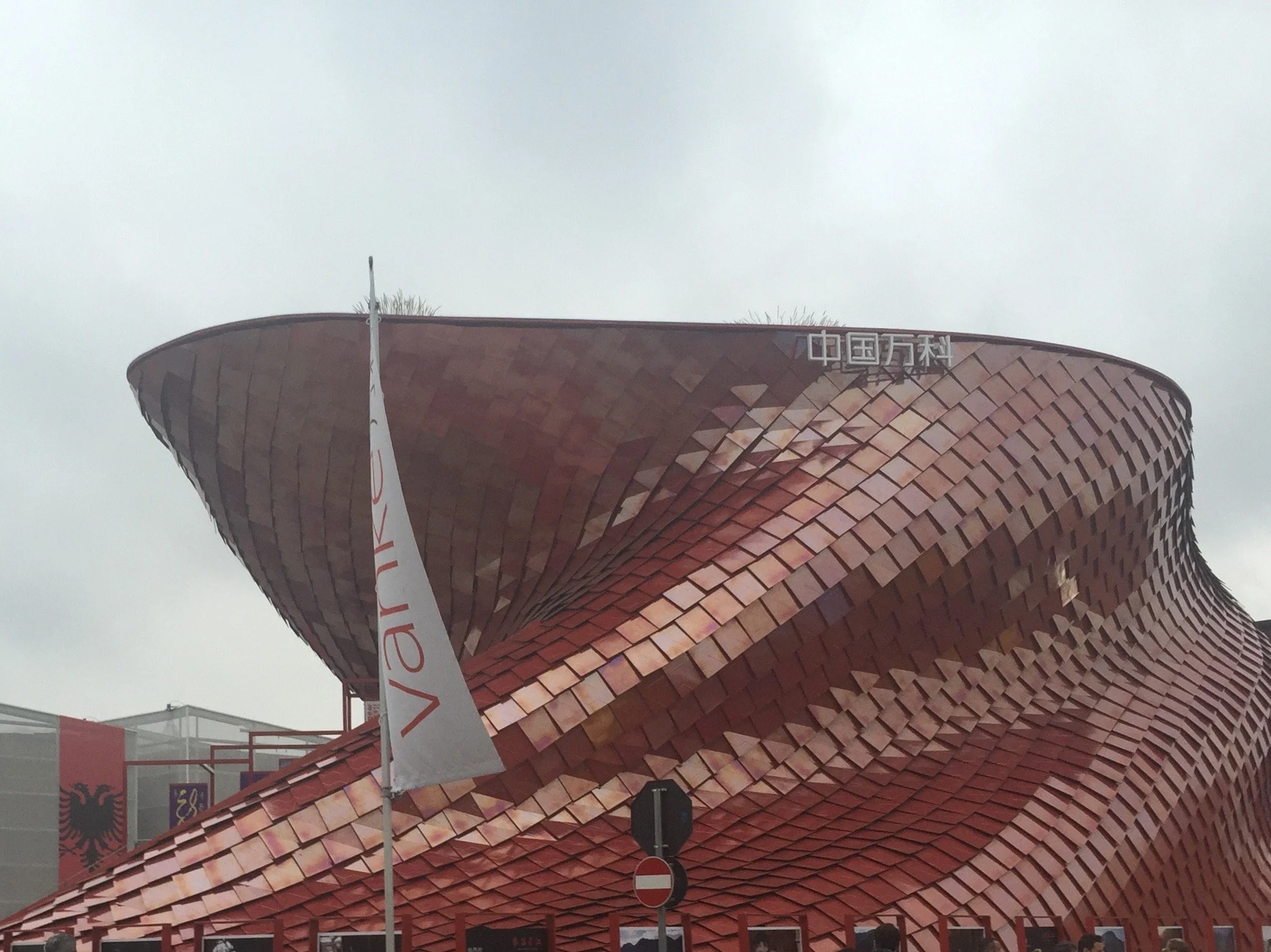
Ebenso präsentierten sich einige Konzerne – die Vanke Group war mir zumindest zuvor unbekannt. Äußere Form und innere Darstellung wirkten stimmig und waren medial überzeugend umgesetzt. Der größte Immobilienentwickler Chinas (Jahresumsatz nahezu fünf Milliarden Euro) zeigte sich außen mit einer roten, schuppenartigen Haut wie ein Drache und bot innen auf zahlreichen Bildschirmen eine übergeordnete Darstellung des urbanen Wachstums.
Übrigens war auch das Armani Hotel hervorragend inszeniert. Im Erdgeschoss betritt man aus einer recht kleinen Halle den Aufzug. Dieser fährt nach oben – man glaubt um eine Etage –, die Türen öffnen sich und man genießt den Blick über Mailand. Vom achten Stockwerk aus, denn der Aufzug ist ein perfekt abgestimmter Expresslift. Das nenne ich gelungen inszeniert.
But enough of the negatives:
The symbol of the Expo, the Albero della Vita was quite Impressive
The nightly show of Marco Balich and its Tree of Life, where together with the Milanese composer Roberto Cacciapaglia enchanted millions of visitors, was nice and entertaining. The design is taken from Michelangelo’s Piazza del Campidoglio plaster in Rome, which was converted to 3D and equipped with the latest technology. In some moments Italian Kitsch could be seen – but also this belongs here.
Even so some Groups have presenting themselves – at least I did not know the Vanke Group. External shape and internal presentation fit together, were medially well designed. The biggest real estate companies in China (annual sales nearly 5 billion euros) showed externally with a red scaly skin like a dragon and offered internally on tens of screens an overarching presentation on urban growth.
By the way, well staged is also the Armani Hotel. On the ground floor you enter the elevator from a quite a small hall. This moves up (you believe one level), the elevator doors open and you can enjoy – the view over Milan. From the 8th floor because the elevator is an extremely well adjusted Express Lift. I call that well staged.
http://www.expo2015.org/rivivi-expo/